
For months, Shalini Thakur tried to create distance from a man she said was making her afraid. She discovered a tracking device under her car, reported disturbing incidents and eventually obtained a restraining order. But on September 8, the warnings became a deadly reality.
The 38-year-old Indian-origin woman was fatally shot outside a shopping centre in Sacramento, California, after authorities say she was followed and attacked by 22-year-old Rohit.
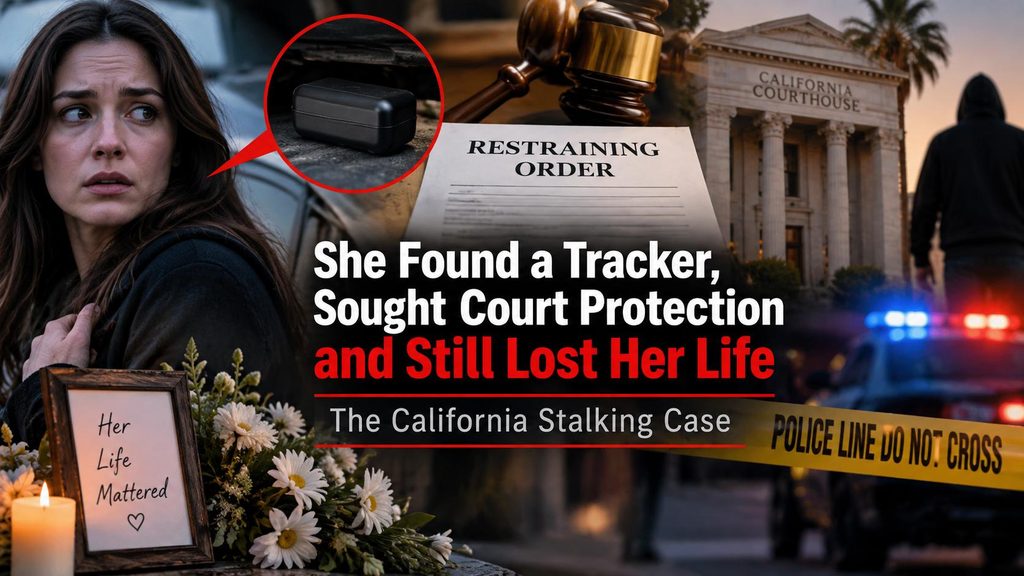
The case has drawn attention not only because of the killing itself, but because of the alleged trail of stalking and harassment that preceded it.
According to reports and authorities, Thakur had already sought help before the shooting. Yet the legal protection she obtained did not prevent the alleged stalker from reaching her.
Rohit later died from a self-inflicted gunshot wound after a confrontation with police, authorities said.
The Warning Sign Under Her Car
One of the most disturbing details in the case emerged when Thakur reportedly discovered an Apple AirTag hidden beneath her car.
An AirTag is designed to help people locate their belongings. In a stalking case, however, the same technology can potentially be misused to monitor someone’s movements without their knowledge.
The discovery reportedly prompted Thakur to become increasingly concerned about who was following her and how much the man knew about her movements.
What followed, according to reports, was a series of incidents that made the situation increasingly frightening.
The Alleged Intrusion Into Her Home
The tracking device was reportedly not the only warning sign.
Thakur also reported an incident involving an alleged intrusion into her apartment while she was sleeping. Reports say authorities later learned that the accused had allegedly obtained or copied a key to her home.
For someone already worried about being watched, an alleged intrusion into the place where she should have felt safest represented a significant escalation.
Her family has said she was frightened and repeatedly sought help.
She Went to Court for Protection
By May, Thakur had obtained a restraining order against Rohit.
The legal order was intended to establish a clear boundary between the two.
But according to authorities and reporting on the case, Rohit allegedly violated the order.
That detail has become central to the questions surrounding the case: What happens when a person who is already being accused of stalking continues to approach or monitor the person who has sought legal protection?
The tragedy that followed has intensified those questions.
The Final Encounter
On September 8, Thakur was outside a Panera Bread restaurant in the Sacramento area when the confrontation occurred.
Authorities say Rohit approached her, chased her through the parking area and shot her.
Surveillance footage reportedly captured parts of the attack.
Thakur died from her injuries.
Rohit fled the scene before police located him on Highway 50. A standoff followed, and authorities later found him inside his vehicle with a gunshot wound they believe was self-inflicted. He subsequently died. Police said their officers did not fire the shot that killed him.
A Family Left With Questions
Thakur’s death has left her family searching for answers about how the situation escalated so far.
Her mother, Sudesh Kumari, has described her daughter as frightened of Rohit and said the alleged harassment had continued for months.
Family members have also questioned whether more could have been done after the earlier reports and the restraining order.
Those concerns are allegations and questions raised by the family; the precise responsibilities and actions of individual agencies remain matters for investigation and the available court and police records.
When Technology Becomes Part of Stalking
The AirTag detail has added another dimension to the case.
Tracking devices can be useful for locating luggage, keys, vehicles and other possessions. But the same technology can become a tool for unwanted surveillance when secretly placed on another person’s belongings.
Thakur’s case illustrates how a seemingly small technological discovery can become a major warning sign when it appears alongside other forms of harassment.
The issue is not the technology itself. It is how technology can be misused to remove someone’s ability to control who knows where they are.
The Pattern Matters
Individually, some incidents in stalking cases can appear less serious than the eventual violence.
A person may receive unwanted messages. A vehicle may be followed. A tracker may be discovered. Someone may appear repeatedly at a home or workplace.
But when several such incidents occur together, the pattern can become much more alarming.
In Thakur’s case, reports describe a progression from alleged monitoring and harassment to an alleged home intrusion, a restraining order and ultimately a fatal shooting.
A Tragic Gap Between Protection and Safety
A restraining order is a legal protection. It does not physically prevent someone from approaching another person.
That distinction is at the heart of the questions emerging from this case.
Thakur had taken a formal legal step to keep Rohit away, according to reports. Yet authorities allege that he continued to violate the boundaries imposed by the order.
Her death has therefore prompted renewed discussion about how stalking cases are handled when threatening behaviour escalates.
The case does not establish that any particular agency could have prevented the killing. But the sequence of reported events has understandably raised questions for the family and the wider public.
Who Was Shalini Thakur?
Beyond the circumstances of her death, Thakur is being remembered by relatives and friends as a caring and generous woman.
Her mother had reportedly travelled from India and was with her daughter shortly before the tragedy.
Thakur was 38 and would have turned 39 on September 19.
For her family, the story is therefore not simply about a criminal case. It is about a daughter whose life was abruptly taken away after a period in which she had reportedly been trying to protect herself.
The Suspect’s Death Leaves the Case Without a Trial
Because Rohit died after the shooting, there will be no criminal trial against him.
That means many questions that might ordinarily be examined through testimony, cross-examination and a full court proceeding may instead have to be answered through police investigations, surveillance footage, witness accounts and other evidence.
Authorities continue to investigate the circumstances surrounding the shooting and the events leading up to it.
A Story About Warning Signs
The most unsettling aspect of the case is the reported sequence of events.
A hidden tracker.
Alleged harassment.
An alleged intrusion into her home.
A request for legal protection.
An alleged violation of that protection.
And finally, a shooting in a public place.
Each event was different, but together they formed a pattern that had become increasingly dangerous.
Shalini Thakur’s death has therefore brought renewed attention to a difficult question: How can stalking be identified and stopped before persistent harassment turns into irreversible violence?
For her family, that question comes too late.
They are now left mourning a woman who, according to those close to her, had already tried to warn others that she was afraid.