
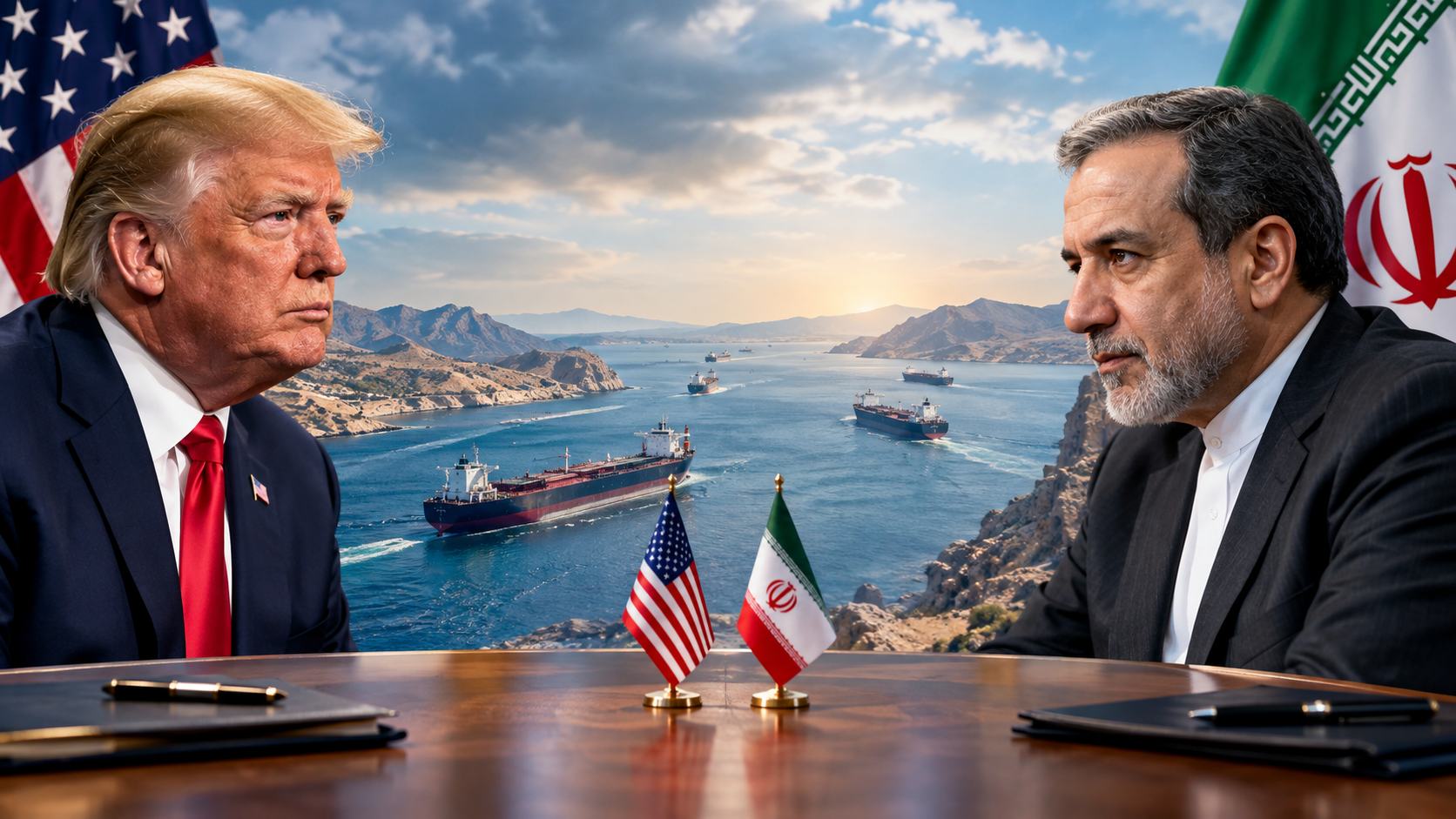
A new Iranian proposal to pause the war and reopen the Strait of Hormuz has been rejected by US President Donald Trump, but the decision does not necessarily mean diplomacy has collapsed.
Instead, the latest exchange reveals something more fundamental: Washington and Tehran are still negotiating from completely different starting points.
Iran proposed a seven-day framework that would reopen the strategically important Strait of Hormuz and revive nuclear negotiations. But Tehran also wanted major concessions from Washington, including an end to the US naval blockade of Iranian ports, relief from sanctions affecting its oil exports and access to billions of dollars in frozen assets.
Trump rejected the proposal.
US Ambassador to the United Nations Mike Waltz later explained that Washington did not believe Iran was offering enough in return for those concessions. Speaking to US media, Waltz said Iranian negotiators were seeking major measures “up front” before substantive negotiations even began.
That disagreement may be more important than the rejection itself.
Iran Offered a Roadmap, Not a Simple Ceasefire
The Iranian proposal was presented as a possible route toward ending the conflict, but it was conditional.
According to reports, Tehran proposed reopening the Strait of Hormuz within seven days and restarting negotiations over its nuclear program. In exchange, Iran wanted the US naval blockade lifted, sanctions on Iranian oil eased and a ceasefire restored across the region.
Iranian Foreign Minister Abbas Araghchi said Tehran’s conditions were clear and that a negotiated solution was necessary to break the deadlock.
From Tehran’s perspective, the logic was straightforward: Iran would take steps affecting one of the world’s most important shipping routes, while Washington would first remove measures that were putting economic and military pressure on Iran.
Washington saw the sequence differently.
The Trump administration wanted Iran to make commitments on the nuclear issue before receiving major economic and military concessions.
That is where the proposal ran into trouble.
Why Washington Said No
Waltz offered the clearest explanation so far.
He said Iranian negotiators were asking for sanctions relief, access to frozen funds and an end to the blockade before meaningful negotiations. The US position, according to Waltz, was that Iran needed to demonstrate that it was genuinely prepared to negotiate an end to its nuclear program.
The dispute is therefore not simply about whether the two sides want peace.
Both sides have publicly indicated that they want a negotiated outcome.
The disagreement is over what happens first.
Iran wants pressure reduced before the broader negotiation begins.
The US wants nuclear commitments before it gives up some of its leverage.
That sequencing problem has become the central obstacle.
Trump Says Iran Is Under Pressure
Trump has also offered his own explanation for rejecting the proposal.
He argued that Tehran was making the offer because Iran was under severe pressure, saying Iranian leaders wanted an agreement because, in his assessment, they were “losing so badly.”
That statement reveals how the White House is viewing the negotiations.
Trump appears to believe that the current combination of military pressure, economic sanctions and restrictions on Iranian oil exports gives Washington greater bargaining power.
If that calculation is correct, the administration has little incentive to accept a deal that gives Iran major concessions at the beginning of the process.
But there is an obvious risk.
Pressure can create incentives for negotiation, but it can also make an adversary less willing to compromise publicly.
That leaves both governments trying to determine how much pressure is enough without pushing the conflict into another round of escalation.
Hormuz Is the Immediate Flashpoint
The Strait of Hormuz makes the dispute far bigger than a conventional ceasefire negotiation.
The waterway is one of the world’s most important energy routes. Disruptions there can affect oil shipments, tanker insurance, freight costs and energy prices far beyond the Middle East.
Iran has linked the reopening of the strait to the broader negotiations.
President Masoud Pezeshkian has said the waterway can be reopened through diplomacy and has rejected the idea that military force alone can solve the crisis.
The United States, meanwhile, says it has been protecting shipping through the strait. Axios reported that dozens of oil tankers were still moving through the waterway under US protection, although traffic remained well below pre-war levels.
This creates an unusual situation.
The same waterway that Iran wants reopened as part of a diplomatic settlement is also an important source of leverage in the confrontation with Washington.
Neither side therefore wants to surrender its bargaining position too early.
The Nuclear Question Remains at the Center
Behind the arguments over Hormuz and sanctions lies the issue that Washington considers fundamental: Iran’s nuclear program.
Trump has repeatedly said that Iran cannot be allowed to possess a nuclear weapon.
The administration therefore wants any durable settlement to address the nuclear issue rather than simply producing a temporary ceasefire.
Iran, meanwhile, has sought to connect the nuclear negotiations to the wider economic and military situation.
This difference helps explain why reopening Hormuz alone cannot resolve the conflict.
Even if ships begin moving normally again, the central dispute over Iran’s nuclear capabilities and the sanctions regime would remain.
In other words, reopening the waterway could be a first step, but it would not automatically produce peace.
Why the Rejection Does Not Close the Diplomatic Door
There is another important detail that can easily get lost in the headline.
Trump’s rejection of the latest Iranian proposal does not mean Washington has abandoned negotiations.
Trump told Axios that he expected more talks with Iran during the following week and said Tehran wanted a deal, although not the deal he wanted.
That distinction matters.
A government can reject a particular proposal while continuing to negotiate.
In fact, rejecting an opening offer can sometimes be part of the negotiation itself.
The US appears to be signaling that it wants Iran to return with different terms. Iran, meanwhile, has indicated that its conditions remain important.
That leaves room for mediators to search for a compromise between the two positions.
The Real Problem Is Trust
The hardest obstacle may ultimately be neither sanctions nor Hormuz.
It is trust.
Waltz said the Trump administration lacks confidence that Iran would honor its commitments. He referred to an earlier understanding reached in Pakistan and argued that Iran subsequently violated it.
Iran, for its part, has continued to argue that diplomacy is the path toward resolving the crisis.
This creates a classic problem in negotiations between adversaries.
Each side wants guarantees from the other before taking its own risky step.
Washington wants confidence that Iran will make lasting nuclear commitments.
Tehran wants confidence that any concessions it makes will actually lead to sanctions relief and an end to military pressure.
Without a mechanism that addresses both concerns, even a promising proposal can quickly reach a dead end.
What Could Happen Next?
The most immediate possibility is another round of indirect negotiations.
Trump has indicated that he expects further discussions, while mediators such as Qatar have been involved in passing messages between Washington and Tehran.
A future agreement could therefore look different from Iran’s rejected seven-day proposal.
Instead of one side making major concessions first, negotiators could attempt a phased arrangement.
For example, limited steps could be exchanged simultaneously rather than sequentially. Measures affecting shipping could be linked to specific nuclear commitments, while sanctions relief could be tied to independently verifiable actions.
Such an approach would allow both sides to claim that they had not surrendered their main leverage at the beginning of the process.
But whether that can happen remains uncertain.
The Stakes Extend Beyond Washington and Tehran
The consequences of this diplomatic standoff will not be limited to Iran and the United States.
Any prolonged disruption around Hormuz can affect global energy markets. Asian economies are particularly exposed because large volumes of Middle Eastern energy normally travel through the region.
Shipping companies also face higher insurance and security costs when the threat of military confrontation remains elevated.
For countries such as India, China and Japan, the issue is therefore both a geopolitical and an economic concern.
A diplomatic breakthrough could gradually reduce those risks.
A return to large-scale fighting could push them higher.
The Bigger Story Is the Battle Over Leverage
The latest development is best understood not simply as Trump rejecting an Iranian peace offer.
It is a contest over leverage.
Iran is trying to use the Strait of Hormuz and the possibility of renewed nuclear negotiations to obtain relief from the pressure Washington has imposed.
The United States is trying to use that same pressure to force Iran into accepting a broader nuclear settlement.
Neither side appears ready to make the first major concession.
That is why the rejection matters — but it is not necessarily the end of the diplomatic process.
The next stage will depend on whether Washington and Tehran can find a way to exchange concessions simultaneously rather than demanding that the other side move first.
For now, the door to negotiations remains open.
But the two governments are standing on opposite sides of it, each waiting for the other to take the first step.